The Ultimate Homemade Sushi Recipe: A Stress-Free Guide for UK Parents
Last Friday, I watched a neighbour shell out £42 on a single takeaway platter that arrived looking a bit sad and tasting mostly of fridge. It’s a common story because we’ve been told that making a proper sushi recipe requires years of training and a bank account that can handle £15 blocks of sashimi-grade tuna. We all want to give the kids something fresh and exciting for their tea, but the fear of “mushy rice syndrome” or accidentally poisoning the family with raw fish keeps most of us firmly in the frozen pizza aisle.
I’m here to tell you that you can ditch the stress and the specialist shops entirely. You’ll learn how to create impressive, budget-friendly rolls using everyday ingredients from your local Aldi or Tesco that cost less than £2 per person. We are going to cover the secret to foolproof sticky rice, safe filling alternatives that the kids will actually eat, and the simple rolling technique that gets your Friday night dinner sorted in under 40 minutes.
Key Takeaways
- Ditch the pricey high-street chains and learn how to whip up a family tea that’s both budget-friendly and genuinely impressive.
- You don’t need fancy gear; we’ll show you how to get perfect results with a sharp knife and even a standard kitchen tea towel.
- This simple sushi recipe takes the stress out of rolling, including a clever “pro” trick to stop rice sticking to your fingers.
- Raid the pantry for everyday UK supermarket ingredients like tinned tuna to create delicious, healthy fillings the kids will love.
- Get the school lunchboxes sorted in advance with our tips on prepping and presenting your sushi for that restaurant-style “wow” factor.
Why Homemade Sushi is the Ultimate Family Tea
Let’s be honest, when most of us think of sushi, we picture a trendy London restaurant or a quick grab-and-go box from the supermarket. You might think it’s too fiddly or expensive for a Tuesday night, but I’m here to tell you that this sushi recipe is actually the secret weapon your weekly meal plan needs. It’s healthy, surprisingly cheap, and the kids absolutely love getting their hands stuck in. Making it at home takes the mystery out of the process and puts you in control of the ingredients.
Beyond the novelty, sushi is a nutritional powerhouse. It’s naturally low in fat and high in protein, especially if you use plenty of fresh fish or eggs. It’s also the perfect vehicle for “hidden” veggies. Finely sliced peppers, cucumbers, and carrots add a satisfying crunch that even the pickiest eaters seem to enjoy when it’s wrapped up in a neat little roll. It turns tea time into an activity, which is a lifesaver on those long rainy afternoons when everyone is a bit bored.
Breaking the “Raw Fish” Myth for UK Parents
The biggest hurdle for most parents is the idea that sushi equals raw fish. In reality, the word sushi actually refers to the rice, specifically su-meshi, which is simply rice seasoned with vinegar, salt, and sugar. It has nothing to do with raw toppings. You can make a cracking meal using cooked ingredients found in any UK supermarket aisle. Tinned tuna mixed with a bit of mayo, sliced ham, or even some leftover roast chicken work brilliantly. When you use British Lion Mark eggs for a quick omelette strip or sustainably sourced prawns from the chilled section, you know exactly what’s going into your kids’ bellies. It’s safe, simple, and totally stress-free.
The Cost Benefit: Restaurant Quality for Supermarket Prices
If you’ve ever winced at the £15 price tag for a small platter at a high-street chain, you’ll love the maths behind making it yourself. A standard supermarket sushi meal deal often costs around £5.50 for just six small pieces. By contrast, a 500g bag of sushi rice costs roughly £1.50 and makes enough to feed a family of four. For a total cost of around £1.85 per person, you can serve up a massive sushi feast that would cost over £40 at a restaurant.
The initial setup is budget-friendly too. A single bottle of rice vinegar costs about £2.00 and will last in your kitchen cupboard for months of meals. Because this sushi recipe relies on pantry staples and basic fresh produce, it’s a brilliant way to keep the food bill down while still feeling like you’re having a proper treat. You don’t need fancy equipment; a simple tea towel can even stand in for a bamboo rolling mat if you’re just starting out.
- Budget-friendly: Feed the whole family for less than the price of two meal deals.
- Customisable: Everyone chooses their own fillings, so there’s no moaning about “bits” they don’t like.
- Quick to clear: Very few pots and pans are involved once the rice is cooked.
The Essential Kit and the Secret to Perfect Sushi Rice
You don’t need a professional kitchen or a degree in culinary arts to master a sushi recipe at home. Most of the gear you need is likely sitting in your cupboard already. While the pros use expensive cypress wood tubs, we can get the same results with a glass bowl and a bit of common sense. The goal is a stress-free tea time, not a Michelin star, so let’s focus on the bits that actually matter for flavour and structure.
What You Actually Need (and What You Can Skip)
A bamboo rolling mat is a handy tool that costs about £1.50 in the world food aisle of most UK supermarkets. If you don’t have one, don’t panic. A clean tea towel folded into a rectangle and covered tightly with cling film works as a brilliant makeshift roller. The most vital tool is actually your sharpest knife. A dull blade will tear the seaweed and squash your fillings into a sad mess. Ensure you have a wooden spoon or a plastic spatula for the rice. Metal spoons can react with the acidity in the vinegar, which occasionally leaves a faint metallic taste that ruins the delicate balance of the dish. For your store cupboard, stick to the basics: rice vinegar, caster sugar, and fine sea salt. These three simple ingredients are all you need to transform plain grains into authentic sushi rice.
Nailing the Rice: The Vinegar, the Sugar, and the Stickiness
The rice is the heart of the dish. You must use short-grain “Sushi Rice” because it contains the specific starch levels needed to hold a roll together. Long-grain varieties like Basmati simply won’t stick, leaving you with a plate of loose grains. Start by rinsing your rice in a sieve under cold water. You need to do this at least 4 times, or until the water runs clear. This removes excess surface starch that makes rice gummy rather than sticky. For the cook, use the “Dad-proof” ratio: 1 part rice to 1.2 parts water. For a family of four, 500g of rice to 600ml of water is the sweet spot. Boil it, simmer for 10 minutes, then let it steam with the lid on for another 15 minutes.
While the rice steams, dissolve 4 tablespoons of rice vinegar, 2 tablespoons of caster sugar, and 1 teaspoon of salt in a small jug. Pour this over the warm rice and use a cutting motion with your wooden spoon to incorporate it. To get that professional pearly shine, grab a piece of cardboard or a magazine and fan the rice for 5 minutes while you mix. This cools the rice quickly and sets the seasoning. You’ll know it’s ready when the grains look glossy and feel tacky to the touch. If you’re looking for more ways to get the kids excited about help in the kitchen, check out our other family-friendly meal ideas for your weekly rotation.
Choosing Your Fillings: From Tinned Tuna to Smoked Salmon
You don’t need a degree in marine biology or a direct line to a Tokyo fish market to make a cracking sushi recipe at home. In fact, some of the best fillings are probably sitting in your fridge or pantry right now. I call this the “Supermarket Sweep” approach. It’s about being practical, budget-friendly, and knowing that a £4.50 pack of British smoked salmon is a brilliant, safe shortcut that tastes just as good as raw grade fish without any of the worry.
The secret to a roll that doesn’t fall apart lies in the prep work. You want everything cut into long, thin batons. Aim for matchstick thickness for your cucumbers, peppers, and carrots. If they are too chunky, your roll will look like a bloated burrito and the seaweed might tear. For carrots, a quick 30-second blanch in boiling water softens them just enough so they don’t poke through the rice, but they still keep that satisfying crunch.
The “Supermarket Sweep” Sushi Filling Guide
Transforming basic ingredients into a restaurant-style treat is easier than you think. For a “Spicy Tuna” roll, drain a 145g tin of tuna chunks thoroughly and mix it with a tablespoon of mayo and a squeeze of sriracha. It is a total game-changer for the kids’ tea. If you want that classic California vibe, grab a pack of cooked king prawns or those budget-friendly “crab” sticks from the chilled aisle. When it comes to avocado, slice it into thin wedges just before you start rolling. Squeeze a bit of lemon juice over the slices to ensure they stay a vibrant green for the duration of your meal.
Vegetarian and Vegan Options Kids Will Actually Eat
If your little ones aren’t keen on fish, the “Rainbow Roll” is your best friend. Use vibrant red peppers, yellow sun-blushed tomatoes, and even leftover roasted sweet potato wedges. For a proper British twist, try using pickled radish or thin strips of roasted beetroot; the earthy sweetness works perfectly with the vinegared rice. These colourful options make the plate look incredible and get some extra veg into the day. This sushi recipe is incredibly versatile, and if you want to turn it into a full Japanese feast, I highly recommend serving these rolls alongside some homemade gyoza to keep everyone full and happy.
How to Roll Sushi Like a Pro (Even if You’re Clumsy)
Right, let’s get down to the business of the actual roll. It’s the part that puts most parents off, but I promise it’s easier than trying to fold a fitted sheet. First, lay your bamboo mat down on a flat surface and place the nori sheet on top. You need to make sure the shiny side is facing down and the little horizontal lines on the seaweed are running parallel to the slats of your mat. This alignment is vital because it helps the whole thing fold into a proper cylinder rather than a squashed mess.
Now, here’s the secret to keeping your sanity: the vinegar water trick. Keep a small bowl of water with a splash of rice vinegar next to your workstation. Dip your fingers in before you even think about touching the rice. If you don’t do this, you’ll end up with more rice glued to your hands than in the sushi recipe. Spread a thin, even layer of rice over the nori, but leave a 1cm gap at the very top edge. That bare strip of seaweed acts like an envelope flap to seal everything together at the end.
The Step-by-Step Maki Rolling Method
When you’re ready to build, place your fillings in a neat line across the bottom third of the rice bed. Don’t overfill it; three thin strips of cucumber or fish are plenty for a standard roll. Use your thumbs to lift the edge of the mat and your fingers to keep the fillings tucked in place. Give it a firm tuck and roll to create a tight shape. To finish, use a tiny dab of water on that 1cm gap to stick the edge down. It’s sorted.
Troubleshooting: What to Do When It All Falls Apart
If your nori starts looking like a wet rag, you’re likely taking too long. Seaweed starts to absorb moisture from the rice instantly, so aim to get your roll finished within 90 seconds of the rice hitting the sheet. If the ends look a bit rustic and messy, don’t panic. Just trim off the last 5mm of the roll with a wet knife to reveal those beautiful, professional layers inside.
The sharp knife rule is absolutely non-negotiable for a clean finish. Use the sharpest blade you own and wipe it with a damp cloth between every single cut. This prevents the sticky starch from tearing the seaweed. If you’re looking for more ways to make tea time a bit more exciting without the stress, check out our easy family meal plans for more kitchen wins that the kids will actually eat.
Serving Your Masterpiece and Prepping for Tomorrow’s Lunchbox
You’ve rolled, you’ve sliced, and now it’s time to get that “wow” moment at the dinner table. Even a simple sushi recipe looks like a five-star feast when you line the rolls up on a wooden board or a large flat plate. Space them out slightly so the kids can see the colourful fillings. It’s a proper result when the plates come back empty and everyone is asking for seconds. Presentation doesn’t need to be perfect; the rustic, homemade look is part of the charm.
Be careful with the fridge. Cold air is the enemy of fluffy rice, often turning it into hard, chalky pebbles in under four hours. If you’re eating later that evening, keep your sushi in a cool spot under a damp tea towel rather than chilling it. If it absolutely must go in the fridge, wrap the container in a thick kitchen towel to insulate the rice from the direct chill. This keeps the texture much closer to how it should be.
The Sides: Wasabi, Ginger, and Proper Soy Sauce
Most tubes of wasabi you’ll find in the local Tesco or Sainsbury’s are actually about 90% horseradish with a bit of green food colouring. It still packs a punch, so start with a tiny amount. If you can’t find pickled ginger, you can make a “cheat” version. Peel fresh ginger into thin ribbons with a vegetable peeler and soak them in a mixture of two tablespoons of rice vinegar and a teaspoon of sugar for 15 minutes. For a proper family banquet, I love serving these rolls alongside some chicken wings to keep the hungriest teenagers satisfied.
Turning Leftovers into the Best School Lunch Ever
If you’ve got leftover bits, don’t try to re-roll them tomorrow morning during the 7:00 AM rush. The “Sushi Salad” hack is your best friend. Just tip any leftover rice into a Tupperware container, chop up the remaining fish or veg, and crumble a sheet of nori over the top. It’s a deconstructed bowl that won’t get squashed in a backpack.
- Pack it tight: If you do send rolls, pack them tightly in a small box so they don’t rattle around and fall apart.
- Keep it cool: Always use an ice pack in the lunchbox to keep everything fresh until the midday bell.
- Onigiri: Squash leftover rice into triangles with a little tuna mayo in the middle for a sturdy, handheld snack.
Making your own sushi is a brilliant way to ensure nothing goes to waste while giving the kids a lunch they’ll actually be excited to show off. If you’ve enjoyed getting stuck into this sushi recipe, why not partner with a UK dad food blogger to discover even more stress-free ways to feed your family?
Get Stuck Into Your First Sushi Tea
Making sushi at home doesn’t have to be a faff. By sticking to simple supermarket staples like tinned tuna or smoked salmon, you’ve got a healthy, hearty meal sorted in under 30 minutes. This sushi recipe is all about making life easier for busy parents who want to skip the £15 takeaway bill and have a bit of fun in the kitchen instead. Plus, any leftovers tucked into a lunchbox the next morning will save you a fortune on shop-bought sandwiches while giving the kids a treat they actually enjoy.
I’ve spent over 10 years developing family recipes that actually work in a real, messy kitchen. It’s the reason Dad’s Delicious Dinners is now an award-winning UK food blog and has been featured in leading parenting publications. I know exactly how it feels when the 5pm rush hits; I’m here to ensure you feel confident and capable of putting a proper meal on the table without the stress.
Get more family-favourite recipes delivered to your inbox
You’ve got this, so grab that bamboo mat and get rolling!
Sushie Recipe
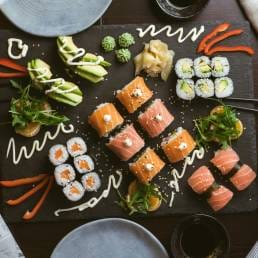
The best Sushi Recipes (How to make Sushi)
How many stars do you give this recipe
Ingredients
Homemade Sushi
- Salmon (I used about a quarter of a side of salmon)
- 1 Bag of sushi rice
- 1 Pack of Nori roasted seaweed sheets
- Half Cucumber
- Black Roasted Seasome seeds (optional)
To Serve
- Pickled Ginger
- Wasabi Paste
- Soy Sauce
You could also use any of the following (optional)
- Prawns
- Crabsticks
- Peppers
- Tuna
Instructions
Homemade Sushi
- Although I have a now, the first few times I made it we didn't and you can manage without. I placed one sheet of the roasted Nori onto the mat and spread a layer of the cooled sushi rice on top, to cover it completely.1 Pack of Nori roasted seaweed sheets, 1 Bag of sushi rice

- At the end nearest to me I placed a row of salmon and cucumber and then sprinkled about a teaspoon of sesame seeds over the whole lot.Salmon (I used about a quarter of a side of salmon), Half Cucumber, Black Roasted Seasome seeds (optional)
- Carefully, from the end nearest me, I began to roll it up as tight as I could. Making sure I tucked the salmon and cucumber in on the first roll. Once completely rolled I sealed the seaweed together with some water, using my finger. Finally, I wrapped the long sausage shape wrap tightly in cling film and placed it into the fridge.Prawns, Peppers, Crabsticks
- When ready to serve, I simply cut each roll into slices about 1-2 cm in depth.
- For the little rectangle-shaped pieces, I actually 'borrowed' a hack from one of the little lady's favourite You-tuber and grabbed my ice-making trays from the cupboard. I then cut some of the Nori Sheets into thin strips of just under 1cm in width. Carefully place them in the middle of each tray, before placing some salmon in and then spooning some of the rice on top. I then simply stuck the ends of the Nori sheet together using some water on my finger. Again I placed them in the fridge until we were ready to eat. To get them out I turned the ice tray upside down and carefully pushed them out.Pickled Ginger, Wasabi Paste, Soy Sauce


Nutrition
Sushi Recipe Nutrition
Common Questions About Making Sushi at Home
Do I really need to buy specific sushi rice?
Yes, you definitely need to buy short-grain sushi rice to make this sushi recipe work. Long-grain varieties like Basmati or Jasmine don’t have enough starch to stick together, which means your rolls will simply fall apart. You can find a 500g bag of sushi rice for around £1.50 in the world foods aisle at Tesco or Sainsbury’s. That extra starch is the secret to getting that perfect, tacky texture that holds your fillings in place.
Is it safe to make sushi with raw fish from the supermarket?
You shouldn’t use standard raw fish from a supermarket counter unless it’s specifically labelled as “sashimi grade.” Most fresh fish sold in the UK isn’t frozen to the -20°C temperature required for 24 hours to kill off parasites. To keep things safe and budget-friendly for the kids, I recommend using smoked salmon, tinned tuna, or cooked king prawns. These options are 100% safe and taste delicious without the worry.
What can I use instead of a bamboo rolling mat?
You can use a clean tea towel covered tightly with a layer of cling film as a brilliant DIY alternative. The towel provides the flexibility you need to shape the sushi recipe into a firm roll without needing extra kit. A flexible plastic placemat also does the job perfectly. Just make sure whatever you use is wrapped in film so the sticky rice doesn’t ruin your fabrics or surfaces.
How long does homemade sushi stay fresh?
Homemade sushi is best eaten on the day, but it’ll stay safe in the fridge for up to 24 hours. The main problem is that the fridge makes the rice go hard and grainy quite quickly. If you’re saving some for a lunchbox the next day, take it out of the fridge 30 minutes before eating. This allows the rice to soften slightly so it doesn’t feel like you’re eating cold pebbles.
Can I use normal white vinegar instead of rice vinegar?
You shouldn’t use standard white malt vinegar because the flavour is far too strong and will overpower the delicate fish. If you’re stuck, the best substitute is apple cider vinegar mixed with a tiny bit more sugar. Use one tablespoon of vinegar and one teaspoon of sugar to get a similar mellow acidity. It’s a simple swap that keeps the flavour balanced without a special trip to the shops.
My sushi rice is too mushy, can I save it?
You can’t fix the texture of overcooked rice once it’s turned to mush, but you can still save the meal. Instead of trying to roll it into traditional shapes, turn it into “sushi bowls” by topping the rice with your fillings. It tastes exactly the same and saves you the frustration of wrestling with a sticky mess. It’s a great way to ensure that £1.50 bag of rice doesn’t go to waste.
Is homemade sushi healthy for kids?
Sushi is a fantastic healthy option for children because it’s loaded with Omega-3 fatty acids and fresh vegetables. A single homemade roll provides about 40 calories and is a brilliant way to sneak 2 of their 5-a-day into a fun meal. Because it’s low in saturated fat and high in slow-release energy, it keeps them full for longer. Plus, using chopsticks is a great way to keep them entertained at the table.
How do I stop the rice from sticking to my fingers?
The best trick is to keep a small bowl of “Tezu” (a mix of water and a splash of vinegar) on your workspace. Dip your fingertips into the water before you touch the rice and it’ll slide right off your skin. I always keep a damp cloth nearby to wipe my hands between rolls. If your hands stay slightly moist, you won’t end up covered in a sticky mess that feels like PVA glue